🌐💻 DevOps 7.5: Exploring AWS CLI 🔧🚀
"Unleashing the Power of AWS CLI: Navigate the Cloud with Command-Line Mastery"

Hey, I am Saswat Samal and I have a strong passion for technology and the open-source community. My expertise lies in MERN stack development, cloud computing, DevOps, and Linux. I am constantly seeking new opportunities to expand my skill set and am actively working on various projects to improve my knowledge.
Introduction:
AWS CLI (Command Line Interface) is a powerful tool that allows users to interact with Amazon Web Services through a command-line interface. It provides a set of commands for controlling AWS services, managing resources, and automating tasks. With AWS CLI, users can efficiently navigate and manipulate various AWS functionalities directly from the command line, streamlining the management of cloud resources. Whether you're a developer, system administrator, or DevOps professional, AWS CLI offers a flexible and efficient way to work with AWS services in a text-based environment.
Installation:
First Install aws-cli in local computer using the installation documentation.
For e.g. - you can use brew - brew install awscli
Configuring aws-cli:
First we have create an IAM user.
Go to IAM dashboard. Then go "Users" present in the sidebar.
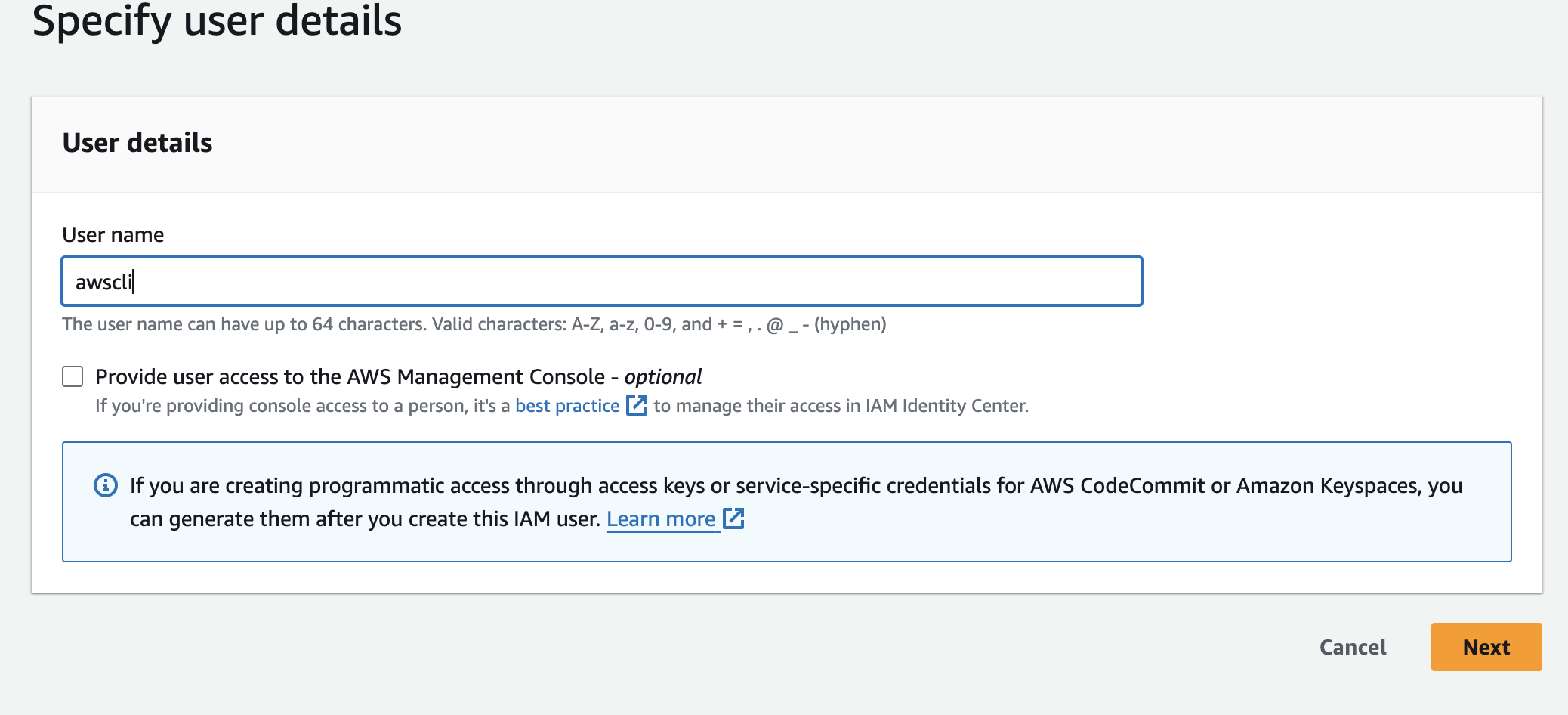
Click on create user. And go to "Next"
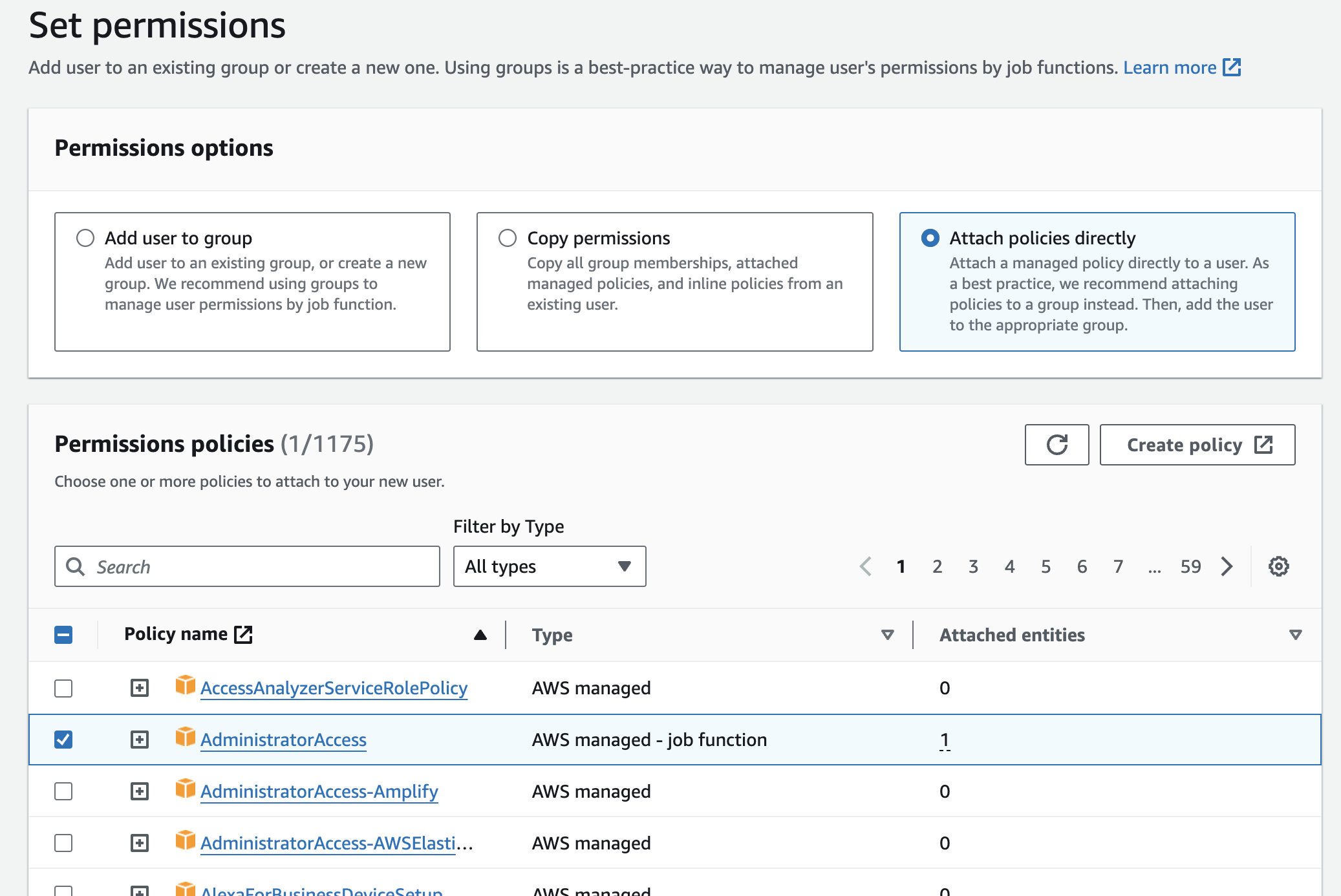
Now set the policies. And go to "Next". And click "Create User".
So now click awscli user. Go to "security credentials"
Click on "Create Access Key".
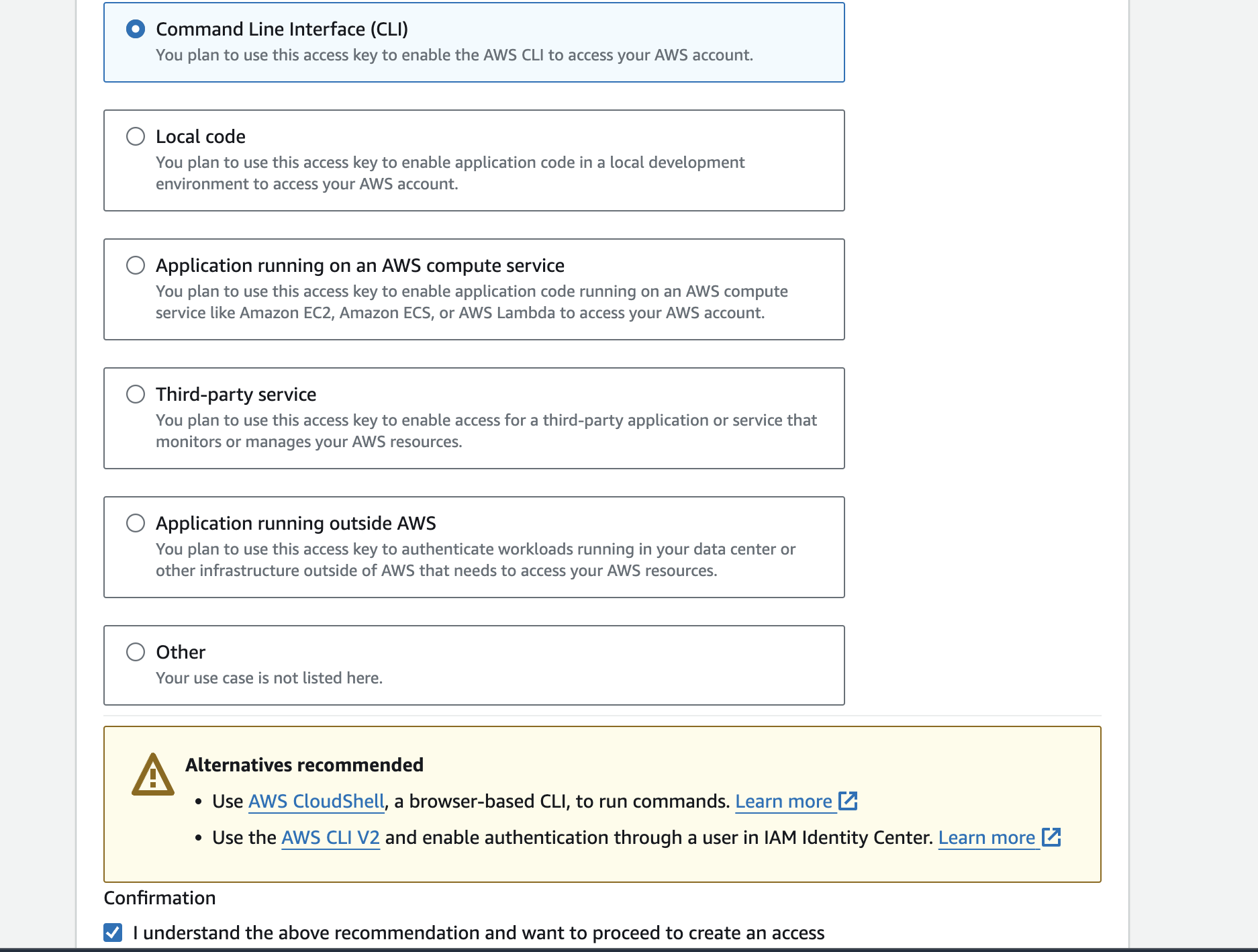
Select Command Line Interface. And click next and next again.
NOTE: Do not reveal your access key and secret access key to anyone.
Go into your CLI and type "
aws configure". And Enter access and secret access key.You can enter region as us-east-1 and output as json.
All the information will be stored in this path
ls ~/.aws/.You can
aws ec2 describe-instances.To show all the instances.
Do refer to awscli documentation for installation and commands - https://docs.aws.amazon.com/cli/
I trust you've mastered the art of crafting IAM users and configuring AWS CLI to seamlessly navigate the expansive world of Amazon Web Services.


